


Lorem ipsum dolor sit amet, consectetur adipiscing elit, sed do eiusmod tempor incididunt ut labore et dolore magna aliqua. Ut enim ad minim veniam, quis nostrud exercitation ullamco laboris nisi ut aliquip ex ea commodo consequat. Duis aute irure dolor

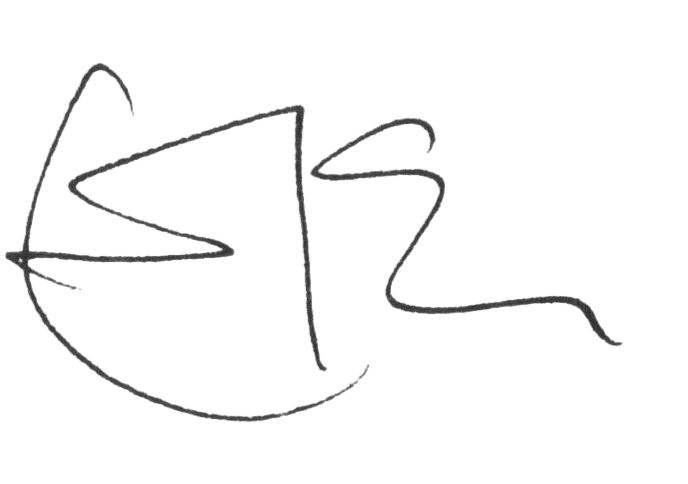
EUGEN KRAMÁR
LIFE AND WORKS
Copyright © 2025 AK

LIFE
"Everything happened in periods shaped by the course of history. I had to accept the changing circumstances as an imposed order I was given to live with, and always strive somehow to exist — to endure."
He was born the son of a pastor and a teacher in the small village of Devičie. Displaying artistic talent from an early age, he was destined for a career in architecture and, with this goal in mind, left to study in Prague, where he embraced the ideals of modernism and functionalism. Later, in Bratislava, he founded an architectural practice with Štefan Lukačovič, which went from one successful commission to the next. Together with Prof. Emil Belluš, he helped establish the Department of Architecture in Bratislava and became its youngest professor. However, the growing pressures of the totalitarian Stalinist regime and the increasing distortion of political and social life would change everything in November 1950.

1914
-
1940
From his birthplace in Devičie and later Vrútky to studying architecture in Prague and completing military service in Trenčín — the early formation of a young architect and his first professional experiences.

1941
-
1950
Founding an architectural studio with Štefan Lukačovič and a professorship at the newly established Department of Architecture — a period of flourishing in private practice and the creation of monumental buildings in the capital.

1950
-
1960
Arrest and sentencing to 14 years and confiscation of property for political reasons. Ten years spent in prisons in Ilava and Prague, and work in the “Basoprojekt” office.

1961
-
1970
Release under amnesty. Work in Košice followed by a return to Bratislava. Contributed to the construction of the venue for the Nordic World Ski Championships in the High Tatras.

1971
-
1989
Excluded from the Union of Slovak Architects by the Normalizers, removed from his position as head of the Bratislava studio, and stripped of his civil and human rights for eighteen years.

1990
-
1996
After the revolution, he devoted himself mainly to publishing while continuing to work in his Bratislava studio. He passed away during the ceremony awarding him the Prize of the Minister of Culture of the Slovak Republic for his creative contribution to architecture.
YOUTH
"On a small rise stood a church, watching over a tiny village you’d hardly find on a map — a place whose hills and forests may not be widely known, yet it is etched deeply in my heart and lives on in my memories."
Eugen Kramár was born in 1914 in the parish house of the small village of Devičie. His father was a Lutheran pastor and his mother a teacher. When he was seven, the family moved to Vrútky, where he attended grammar school and later a Reformist secondary school in Turčiansky Sv. Martine. From 1933 to 1938, he studied architecture at the Czech Technical University in Prague.
In Bratislava, he joined the studio of Fridrich Weinwurm, one of the key figures of Slovak architecture, known for projects such as the Unitas housing complex on Šancová Street or Nová Doba.
When the studio was closed in 1938 due to anti-Jewish laws, Kramár found himself without work. At that point, he made the rather bold decision to open his own studio together with architect Štefan Lukačovič.
1914-1940
"At the time, I was employed by the construction company Tatry, working on the third Nová Doba site for a full 12 hours a day, while Štefan Lukačovič worked at the cooperative enterprise Nupod. This meant we could only spend our evenings working on developing our creative projects. We prepared competition entries modestly in my one-and-a-half-room apartment, using the kitchen table as our desk. Many evenings and nights were spent on these competitions, which kept our spirits up even though the work often went to someone else — someone perhaps more skilled in other ways."
They made an almost ideal pair — Lukačovič was an excellent manager, while Kramár was a creative and highly driven architect. Their studio soon began receiving commissions that played a significant role in shaping the new face of Bratislava.
1940-1950
1940-1950
BRATISLAVA
“My brief but most productive years began after the war. I experienced many new things — sometimes with uncertainty — yet always with the drive and focus of a creative architect, determined to help rebuild our devastated country. The sight of battered streets, ruined parts of the city, and countless destroyed homes filled me with a deep, aching sorrow. All the more, this stirred my creative drive and my resolve to take the initiative and get to work.”
The first joint project of the Kramár–Lukačovič team was the design for the Pavol Országh Hviezdoslav Theatre and its adjoining bank building. Kramár’s design originated from a 1942 competition, where it had won second place. When he was later commissioned to carry out the project, he invited Lukačovič to collaborate, drawing on his colleague’s experience with theatre design from his studies in Brno.
They subsequently established a shared studio on Rázus Embankment. From this period came some of Kramár’s most important works, including the Postal Palace, the Forestry House, the Ministry of Agriculture building, the Police Directorate, and the Dionýz Štúr Geological Institute. Alongside these, he also produced designs for private homes and a number of urban planning studies.
In the post-war years, he regarded cooperation with other Slovak architects as essential — relationships which, as he wrote, were “founded on professional respect, but also on a rare friendship.” He particularly valued the efforts of Professor Emil Belluš, who founded the Association of Architects and, as its chairman, organised regular monthly meetings.
“We were all united in wanting the same thing: to help, to put our skills to use for the good of our community. We had many discussions, enriching one another with our experiences as we tackled the tasks of rebuilding our city and addressing the challenges facing Slovakia.”
After Emil Belluš, he became the second chairman of the Association of Architects, where he organised meetings and exhibitions showcasing the work of both domestic and international architects.
Equally important was his role in education, where, together with Emil Belluš, he contributed to the founding of the Department of Architecture in Bratislava. In 1943, at the age of just 32, he became its second — and youngest — professor. He would later recall this period with great fondness.
1940-1950

In 1948, after the communist coup, a stroke of luck took him to Paris, where he had the chance to experience Western culture and immerse himself in its vibrant artistic life — at that time, shaped in architecture largely by figures such as Le Corbusier. Captivated and inspired by France’s architectural progress, he returned to Czechoslovakia ready to create in the spirit of the modernist ideals dominating Western architecture.
Yet the machinery of totalitarianism was already in motion, and instead of a period of creative growth, Kramár’s life was about to take a completely different — and tragic — turn.
1950-1960

END OF FREEDOM
"It was a beautiful sunny day, November 19, 1950 — though I had no idea it would become, in my life, such a sadly significant one: my last day of freedom. The Karlova Ves hunting society was holding its official autumn hunt. About thirty members gathered in front of the Riviéra pub. Among them, a small group of seven or so kept apart, neither greeting nor introducing themselves. I failed to notice — as the seasoned hunters did — that several of them were carrying military rifles. Three drives were made through the forest. I had barely returned home, not yet out of my clothes or boots, when well-paid young State Security henchmen burst in. They shoved me about, rushed me out the door, and gave me no chance to say goodbye to my wife, while my three children looked on, wide-eyed with fear."
In 1948, after the February coup, the communists seized power and the atmosphere in society changed dramatically. That same year, private architectural studios were abolished — bringing an end to the Kramár–Lukačovič atelier as well. Kramár became an external collaborator of Stavoprojekt, where he completed the projects already underway.
The changes reached the academic environment in which he worked, as well as the Association of Architects, of which he was chairman. Relationships once built on trust, professionalism, and friendship were replaced by intrigue and party loyalty forcibly imposed from above. Kramár began to feel the weight of political pressure and was appalled by the emerging destruction of society and democratic values.
"Brazenly and triumphantly, the ideology of the most brutal violence set itself in motion. The Bolsheviks arrived with a long-term program of liquidation — all, so to speak, in the name of a “better and fairer world.” In doing so, they managed to drive the entire cultural and creative life first into twilight, and then into a long, enduring darkness."
November 1950 marked the end of his most creative period — and the end of his freedom for the next ten years. Eugen Kramár was arrested in his villa on the Riviéra and taken for questioning to the Police Directorate on Račianska Street. An interrogation from which he would never return home.
1950-1960
Instead of any explanation, he faced a two-year confinement in the Justice Palace, with no possibility for creative work. This was followed by a trial, where he was sentenced to 14 years in prison and the confiscation of his property. Several members of his family, including his wife, were also arrested.
Reflecting later on the reasons behind the totalitarian campaign, he considered decisive the case of his brother-in-law, Colonel Alexander Korda, a leading figure of the Slovak National Uprising. At the same time, it was the very perverse logic of the Stalinist machinery — a campaign against the intelligentsia and the arrest of the elite — that created an atmosphere of fear, serving its twisted aims.
"At that time, verdicts were triumphantly celebrated in public — their purpose to deepen fear and strengthen repression. Executioners carried out the sentences on predetermined victims, while poets we knew sang their praises, and many other journalists eagerly joined in this lyrical demolition. Some acted under the spell of ideological intoxication, others from weakness of character and fear."
After his sentencing, Kramár was transferred to Ilava Prison, where he was finally able to return to work. Together with his brother-in-law, who was also imprisoned there, he contributed to the reconstruction of the prison complex. He also designed the district court building in Námestovo.
He was later moved to Prague, where he was tasked with the reconstruction of the Barnabite Convent on Hradčanské Square.
On 10 May 1960, Czechoslovak President Antonín Novotný declared a sweeping amnesty that applied to 5,319 political prisoners. Among them was Eugen Kramár.
1961-1970
RETURN
"Here began a truly remarkable chapter in the history of the High Tatras — one born from the good intentions and idealism of just a few individuals. As time went on, more partners joined, and the idea grew until it reached international significance."
In 1960, after ten years in prison, Kramár regained his freedom. The joy of reuniting with his family was soon overshadowed by disillusionment with the now firmly entrenched socialist system. In architectural circles, there were no open arms — only closed doors and former colleagues who met him with averted eyes.
Unwilling and, as he put it, “unable to go among the architects” in Bratislava, he chose instead to settle in Košice, where political pressures were, at that time, less intense than in the capital. There, he joined Stavoprojekt, producing works such as the church in Švábovce, the Slovenská sporiteľňa building, and the Telecommunications Building in Košice.
His work in the High Tatras stands out most of all, particularly the projects connected to the creation of the so-called “Dream Complex” for the 1970 FIS Nordic World Ski Championships. This exceptional sports complex, unprecedented for its time, included, among other works he designed, the well-known Hotel FIS, the Štrbské Pleso Service Center, and the ČEDOK and Mountain Rescue Service buildings.
1960-1970

NORMALISATION
"I may have been free, but the scheming architects made sure — from behind the scenes — to deal with me thoroughly and maliciously, stripping me of my civil and human rights for the entire period of ‘normalization.’ The Bolsheviks had stolen the most valuable thirty years from a single human life. Defenseless, I looked in vain for understanding among my fellow architects — even from the charlatan Husák — hoping there might still be a homo sapiens to be found here. But there wasn’t. There were only the averted eyes of ashamed faces, and the dull complacency of those who, fortunately for them, were untouched by it… a textbook example of a sick world in which lies and violence outweighed reason, truth, and justice. Tragically, without consequence."
By the late 1960s, Kramár, together with Štefan Svetko and under the auspices of the Union of Architects, founded the Association of Design Studios. It was a “free” mode of practice, modeled loosely on Western systems, in which socially recognized architects and prominent figures acted as leaders and guarantors of design quality. They began with just two studios, and within three years the association brought together 180 architects. Kramár was proud of this newly built system and its efficiency — with minimal bureaucracy, they created a progressive and stimulating working model. Yet precisely because of its independence, it stood in opposition to the bureaucratic socialist sector and quickly drew the attention of the communist authorities.
"We were instructed to form a party group. But it didn’t work — it quickly became clear that among those who actually knew how to work, there weren’t any communists."
1971-1989
The communists moved to dismantle the association — first through purges and screening, then by placing a party-appointed director and political staff in the studios. Some members were branded “elitists” with negative personal traits.
Kramár was removed from his leadership post, denied major commissions, and saw projects like the Záhradky hotel halted. While some work came via the Government Committee for Tourism, many of his designs remained in a drawer.
Even so, he remained active: with A. Valentovič he designed the Eurocamp FICC bungalows, with his daughter Zina the police station in Starý Smokovec, and in the east the Soroška chalet near Rožňava. In 1975 he renovated his returned family villa on the Riviéra. He also worked with sculptor Rudolf Pribiš on squares in Rajec and Stará Turá.
1961-1970
UNTIL THE END
"We ask for so little — to condemn the communist regime just as its predecessor, fascism, was condemned. By the right of justice, we wish to denounce such great evil as a warning to future generations — a natural act of humanism and democracy."
Professor Kramár welcomed the change of regime after the revolution with optimism, ready once again to contribute to the rebuilding of the country’s architectural life. Many of his buildings — such as the theatre or the Post Office Palace — required smaller modifications, in which he took part. He received recognition from the professional community and became the first laureate of the Emil Belluš Prize. In 1991, an exhibition of his life’s work was held at the Slovak Art Forum. He also took part in the re-establishment of the Slovak Chamber of Architects, where he was awarded the honorary membership number 001.
Despite the positive reception, Professor Kramár also felt deep disappointment with the post-revolutionary developments. He was highly critical of the inability to punish the crimes of the totalitarian state, which had destroyed countless lives and distorted society for decades. He was convinced that without “an analysis of the causes of decline and the consequences of totality, it is impossible to effectively establish a democratic regime.”
Although he was now less active in design work, he continued to be engaged. Together with his daughter, Zina Mihalčiková, he worked on the designs of family houses as well as larger projects, such as the reconstruction and extension of the Premonstratensian convent in Trnava and the urban study for the centre of Myjava.
He wrote two books — The Art of Life and Poetry and the Galleys — as well as numerous professional articles.
In his free time, he enjoyed spending time with his close-knit family at their cabin in the picturesque surroundings of the Low Tatras, in Podbanské.
On 30 December 1996, he attended the Minister of Culture Awards, where he was to receive the award For the Development of Slovak Architecture. While accepting the award, he collapsed, and despite efforts to revive him, he passed away the following day. Architecture was the great love of his life — a devotion that accompanied him to his very last breath. He remained active until the very end. His final resting place is in Vrútky. ■
1990-1996

He wrote two books — The Art of Life and Poetry and the Galleys — as well as numerous professional articles.
In his free time, he enjoyed spending time with his close-knit family at their cabin in the picturesque surroundings of the Low Tatras, in Podbanské.
On 30 December 1996, he attended the Minister of Culture Awards, where he was to receive the award For the Development of Slovak Architecture. While accepting the award, he collapsed, and despite efforts to revive him, he passed away the following day. Architecture was the great love of his life — a devotion that accompanied him to his very last breath. He remained active until the very end. His final resting place is in Vrútky. ■
1961-1970
"My life has been a chronicle reflecting the turbulent spiritual, moral, professional, social, and national shifts — a mirror of the full sweep of historic and revolutionary events my generation had to endure. I witnessed the end of a world war, experienced the then very progressive Masaryk-era democracy, then the crisis, unemployment, and the horrors of fascism. I lived through the Second World War, occupation, terror, destruction, postwar reconstruction, the national uprising, deportation, revolution, imprisonment, the collapse of Stalinism, yet another occupation, and yet more rebuilding."
You can read the full story of Eugen Kramár’s life in the book Poetry and Hardship here.
Eugen Kramár - Life and Works
The LIFE AND WORKS brochure offers a concise overview of the architecture of Eugen Kramár. It tells the story of his life, marked by unexpected turns, and highlights the peaks of his career in Bratislava and the High Tatras. You can download it here.

Lorem ipsum dolor sit amet, consectetur adipiscing elit, sed do eiusmod tempor incididunt ut labore et dolore magna aliqua. Ut enim ad minim veniam, quis nostrud exercitation ullamco laboris nisi ut aliquip ex ea commodo consequat. Duis aute irure dolor